Ayahuasca Vs Psilocybin: How To Choose
The ayahuasca vs psilocybin choice comes down to 3 things: what you take every day, what your medical history says, and where you can legally book. Not which one sounds more intense.
Here is the short version. Ayahuasca is an MAO inhibitor. Psilocybin isn’t. That one difference drives the medication rules, and it rules out people who could sit a psilocybin session safely. Both run about the same length, roughly 4 to 6 hours, despite what most comparison pages say. Ayahuasca is much harder on the body. Psilocybin can be taken in licensed settings in Oregon and Colorado. Ayahuasca cannot. In Peru, ayahuasca is legal and protected as cultural heritage.
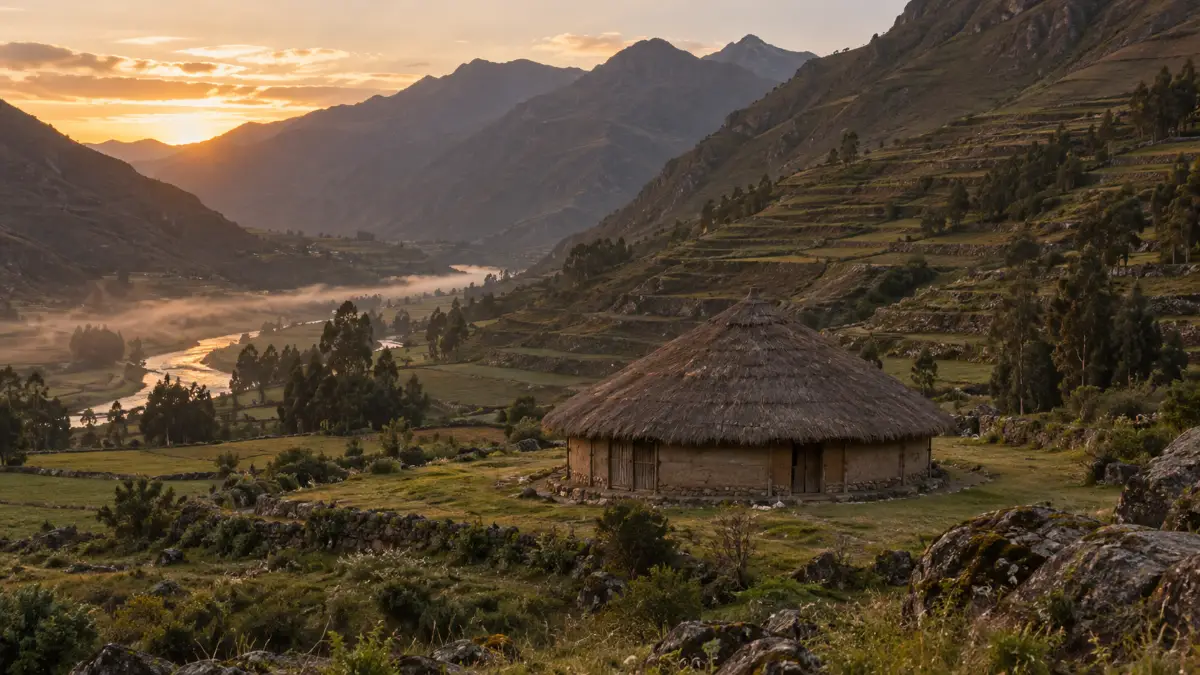
We run an ayahuasca retreat in Peru, in the Sacred Valley 90 minutes from Cusco. We don’t sell psilocybin. This article says when psilocybin is the better fit for you.
What Is the Difference Between Ayahuasca and Psilocybin?
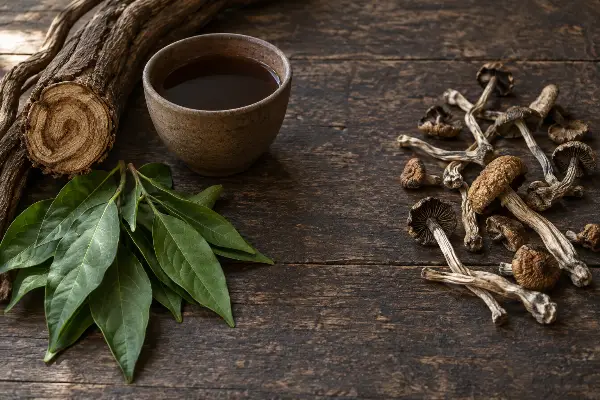
Ayahuasca is a brew of the Banisteriopsis caapi vine and chacruna leaf. The vine’s beta-carbolines block an enzyme called monoamine oxidase, which is what lets the leaf’s DMT work when you swallow it. Psilocybin is a single compound found in mushrooms, and it works alone. Ayahuasca needs 2 plants cooperating. Psilocybin needs 1.
That’s not a trivia answer. It’s the whole safety difference. To make ayahuasca work at all, you have to inhibit an enzyme that also breaks down tyramine and several common drugs. Psilocybin skips that step.
The rest of what you’ve read is real for many people and useless for choosing. The snakes and jaguars. The Mother Ayahuasca presence. The mushroom’s softer inward pull. Those are descriptions of other people’s experiences. They don’t predict yours, and they won’t tell you which one you can take.
Ayahuasca vs Psilocybin: The 3 Things That Decide This
Your medication list, your medical history, and your passport decide this. Everything else is preference.
Most comparison articles treat the choice like a personality quiz. Are you ready for intensity? Do you want to face something external or look inward? Those questions feel meaningful and they answer nothing, because the constraints that matter aren’t about temperament. They’re checkable facts about your body and about where you can lawfully sit a ceremony.
| Ayahuasca | Psilocybin | |
|---|---|---|
| What it is | Vine plus leaf, drunk as a brew | One compound, in mushrooms or truffles |
| MAO inhibitor | Yes | No |
| Measured duration | Resolved by 4 hours in trial conditions | Commonly reported at 4 to 6 hours |
| Vomiting | Expected, and treated as part of it | Possible, usually mild |
| Taken | After dark, seated or lying, with facilitators | Often daytime, eyeshades, music |
| Legal retreat settings | Peru, Brazil, Costa Rica | Oregon, Colorado, Netherlands, Jamaica |
| Hardest stop | Any MAOI medication | Psychosis history |
Work down that table before you read another word about visions. If the medication row rules you out of one column, the rest of the comparison is decoration.
Body Load: Which One Is Harder to Sit Through
Ayahuasca is harder, and it isn’t close. Researchers asked 10,836 people about it in the Global Ayahuasca Survey, published in PLOS Global Public Health. 69.9% of 8,216 respondents reported acute physical adverse effects. Vomiting, nausea, shaking, cold, cramping.
That number sounds alarming until you see the next one. Only 2.3% of 5,775 needed medical attention afterwards. The purge isn’t a complication. It’s the expected event, and a center that treats it as an emergency doesn’t know what it is doing.
Psilocybin produces some nausea while it’s digesting. Usually that’s the end of it. If your main worry is the physical experience, psilocybin is the gentler medicine, and no comparison should tell you otherwise.
What we tell applicants: the purge is not the hard part. Hour 2 is the hard part. The physical side passes, and the psychological side does not care how tough you are. A single ceremony night, hour by hour, is described here.
How Long Does Each One Last?
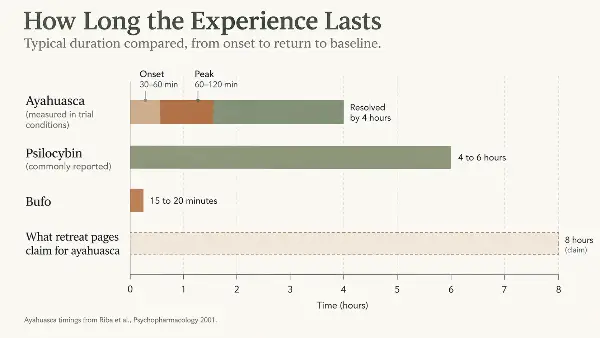
Both last roughly the same time, and the widely repeated claim that ayahuasca runs 8 hours against psilocybin’s 6 is wrong. It compares a ceremony to a drug.
Riba and colleagues gave ayahuasca to healthy volunteers under double-blind conditions and published the timings in Psychopharmacology in 2001. Psychological effects were first noted after 30 to 60 minutes, peaked between 60 and 120 minutes, and were resolved by 240 minutes. A 2025 review in CNS Spectrums repeats the same figures. 4 hours, not 8.
Psilocybin gets reported at 4 to 6 hours. We haven’t run psilocybin sessions, so treat that as the general figure it is rather than something we measured.
So where does 8 hours come from? The room. Our ceremonies run 5 to 6 hours from the cup to the last person sleeping, and the night around them is longer still. The drug finishes before the ceremony does. If a center quotes you 8 hours, ask whether they mean the medicine or the night, because the answer tells you how carefully they talk about everything else.
Can You Take Either One on Your Medication?
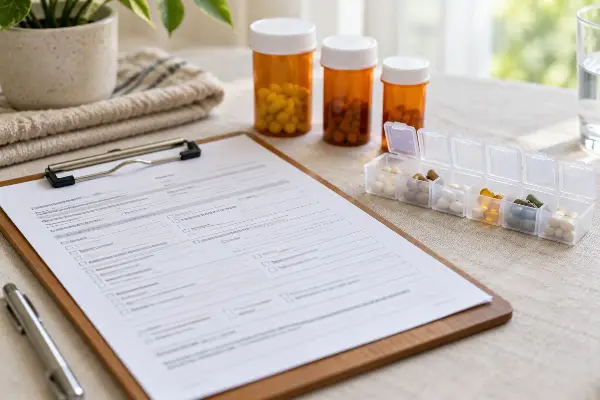
Not with the same rules, and this is the difference that sends people home. Ayahuasca inhibits monoamine oxidase. Psilocybin doesn’t. So the drug interactions are not comparable, and any page that gives you a single SSRI caution covering both isn’t paying attention.
The 2025 CNS Spectrums review puts it directly. The vine’s beta-carbolines are “potent selective, reversible, and competitive inhibitors of the monoamine oxidase (MAO) enzyme, especially of the MAO-A subtype.” Combining ayahuasca with other serotonergic drugs and MAO inhibitors, which includes many antidepressants, “may result in over-stimulation of the serotoninergic system and may cause a serotonin syndrome, which can be a serious (and even fatal) adverse effect.” The same authors note both outcomes appear rare in naturalistic settings and have never been reported in clinical trials.
Rare isn’t zero, and it’s not a reason to be casual. Here is what it means in practice.
Any MAOI medication is an absolute stop with us. Not a case-by-case review, not a conversation. You don’t drink. That’s one of the exclusions on our ayahuasca retreat page, alongside diagnosed schizophrenia, a cardiac event within 12 months, epilepsy, and pregnancy.
Fluoxetine is the one people get wrong most often. The FDA label for Prozac says “at least 5 weeks should be allowed after stopping PROZAC before starting an MAOI intended to treat psychiatric disorders.” Ayahuasca is an MAO inhibitor. A center telling you 2 weeks off any SSRI is applying a house rule to a drug the label already answered. Your prescriber sets your taper, not us and not a retreat brochure.
None of that 5-week problem exists for psilocybin, because psilocybin isn’t an MAOI. If you take a medication that makes ayahuasca unsafe, that’s a real reason to look at psilocybin instead. It’s the most common reason we send someone elsewhere.
What the Incident Numbers Show, and Why They Do Not Compare Cleanly
Both look safe under supervision, and the 2 datasets that exist were built so differently that putting them side by side needs a warning label.
Oregon ran the first full year of regulated psilocybin services in 2025. Published in Frontiers in Psychiatry in 2026: 5,935 clients across 5,375 administration sessions. Across the whole year there were 6 adverse behavioral reactions and 13 adverse medical reactions, with 7 severe events requiring hospital transport. That’s 2.42 behavioral and 2.79 medical adverse events per 1,000 sessions.
Now put the ayahuasca number next to it. 69.9% reporting physical adverse effects. The gap looks enormous.
| Global Ayahuasca Survey | Oregon psilocybin services | |
|---|---|---|
| What it measured | People recalling their own experiences | Incidents a facilitator was required to report |
| Size | 10,836 respondents | 5,935 clients, 5,375 sessions |
| Setting | 50-plus countries, supervised and not | Licensed centers only |
| Headline figure | 69.9% physical adverse effects | 2.79 medical events per 1,000 sessions |
| Needed medical care | 2.3% | 7 hospital transports all year |
The ayahuasca figure is high because it counts vomiting, which is expected. The Oregon figure is low because it counts only what a facilitator had to file. One is a survey of memory, the other is a compliance record. They aren’t the same measurement, and nobody should present them as one.
One finding survives the comparison, and it’s about setting. Non-supervised context showed up in the Global Ayahuasca Survey as a predictor of physical adverse effects, alongside existing health conditions. Oregon’s near-zero severe event rate came out of licensed rooms with trained facilitators. Same drug class, different supervision, different outcomes.
Which points at the thing nobody selling either medicine wants to say.
The Operator Matters More Than the Medicine
Choose the people first. The evidence keeps pointing at who is in the room rather than what’s in the cup.
A well-run psilocybin session beats a badly run ayahuasca ceremony every time, and the reverse is just as true. The variables that showed up in both datasets were supervision and screening, not which plant was used. So the useful question isn’t “which medicine suits me.” It’s “which operator will read my medical file properly and stay awake while I’m not.”
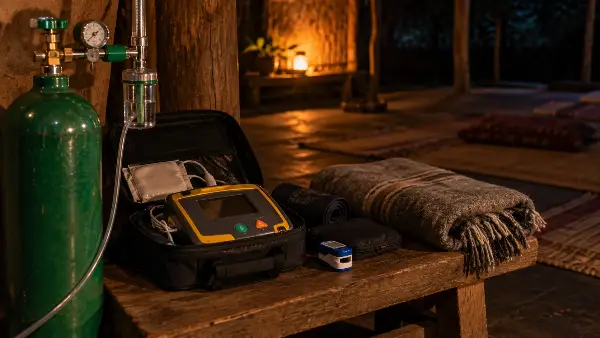
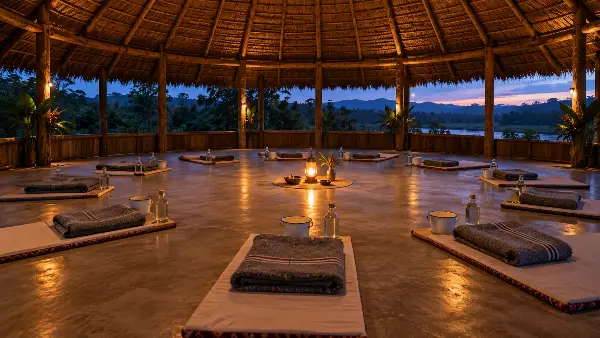
Ours does it. A physician reads every application before a place is offered. She stays awake in the maloca until dawn on all 7 nights, with oxygen and a defibrillator in the room. We take 12 guests, 1 maestro for every 3, with 2 full days of acclimatisation at our Sacred Valley center before anyone drinks on night 3. The full method for sorting real centers from marketing is here, and it works just as well on a psilocybin center as on us.
Where You Can Legally Book Each One in 2026
You cannot book both in the same country, and this is the fact most comparison articles leave out.
| Place | Ayahuasca | Psilocybin |
|---|---|---|
| Peru | Legal, protected as cultural heritage since 2008 | Not offered by retreat centers |
| Oregon | No | Licensed service centers |
| Colorado | No | Licensed healing centers |
| Netherlands | No | Truffles, not mushrooms |
| Jamaica | No | Unscheduled |
Colorado is worth reading carefully before you budget. Its program came from SB23-290, signed in May 2023. The state’s Natural Medicine Division states that “the sale of any natural medicine is prohibited under the law.” You pay for services, not for the mushrooms. That shapes what a Colorado center can charge you for and how the pricing is written.
If you’re set on psilocybin, your shortlist is Oregon, Colorado, the Netherlands or Jamaica. If you’re set on ayahuasca, it is Peru, Brazil or Costa Rica. There’s no city where you can walk between the 2 options and compare. What Peru’s legal position means for American travelers is covered here.
The Third Medicine Nobody Puts in This Comparison
There’s a third option in this conversation, and almost nobody writes it down: 5-MeO-DMT, usually called bufo. It runs 15 to 20 minutes, start to finish.
Read that against 4 hours and 6 hours. The comparison people are agonising over is a choice between 2 long experiences, when a third exists that is over before the other 2 have peaked. It isn’t a gentler option and it isn’t for everyone. It’s a different shape of thing, and leaving it out of a 2-way comparison makes the choice look narrower than it is.
We include a single bufo session in the week, synthetically sourced rather than taken from the toad, and an optional kambo session. Neither substitutes for the other, and neither is the reason to come. Our full list of medicines is short on purpose.
Who We Turn Away, and Where We Send Them
About 1 application in 5 doesn’t proceed. Every declined applicant gets the reason in writing, plus a referral. That policy is the most useful thing we can offer someone reading a comparison article, because it’s where the abstract question turns into a decision about you.
The people we point toward psilocybin are usually one of 3 kinds. Someone on a medication whose interaction with an MAO inhibitor we will not risk. Someone with a cardiac history that a night of purging at altitude makes a bad idea. Someone whose reason for coming is exploratory rather than urgent, and who would get what they want with less physical difficulty.
Some people we decline outright and refer to a doctor rather than to another center. Diagnosed schizophrenia or bipolar I. An active eating disorder. A cardiac event in the last 12 months. That isn’t a filter we apply to protect ourselves. It’s where the evidence on supervision and pre-existing conditions points.
We opened on 28 July 2026 and we say the date. We don’t publish outcome statistics, because we haven’t run long enough to have real ones. A center quoting you a success rate in its first year is quoting you something it can’t have. Our maestros, physician and the rest of the team are here.
Which Should a First-Timer Choose?
If you’re new, take your medication list to a doctor first and let it decide, then choose based on how much physical difficulty you are prepared for. Not on which medicine has the better story.
Psilocybin makes the reasonable first step for most people who have never done either. It is shorter to recover from, easier on the body, and available in settings where the operator is licensed and inspected by a state agency. Nobody inspects us. Peru doesn’t regulate ayahuasca centers, and we’d rather you knew that than found out later.
Ayahuasca fits better when you’ve done this before, when you want the ceremonial container and the maestros rather than a clinical room, and when your medication list is clear. The food and medication rules start 3 weeks before you fly, and what a Peru retreat costs is broken down here.
Whichever of the 2 you land on, the ayahuasca vs psilocybin question matters less than the operator you hand your medical history to. Send us your medication list and we will tell you if we are the wrong room for you.
FAQs
What is the difference between ayahuasca and psilocybin?
Ayahuasca is a brew of 2 plants, and one of them inhibits monoamine oxidase so the other’s DMT works when swallowed. Psilocybin is a single compound in mushrooms that works on its own. The practical difference is drug interactions: ayahuasca is an MAO inhibitor and psilocybin isn’t, which changes which medications rule you out.
Which is stronger, ayahuasca or psilocybin?
Ayahuasca is harder on the body. The Global Ayahuasca Survey found 69.9% of 8,216 respondents reported acute physical adverse effects, mostly vomiting and nausea, while 2.3% needed medical attention afterwards. Psilocybin usually produces mild nausea during digestion and little else. Intensity of the psychological experience depends on dose and on you, not on which plant it came from.
How long does ayahuasca last compared to psilocybin?
About the same. Riba and colleagues measured ayahuasca’s psychological effects starting at 30 to 60 minutes, peaking between 60 and 120 minutes, and resolving by 240 minutes. Psilocybin is commonly reported at 4 to 6 hours. The claim that ayahuasca runs 8 hours describes the ceremony, not the medicine.
Can you take ayahuasca or psilocybin on antidepressants?
Ask your prescriber, and the answer is not the same for both. Ayahuasca inhibits MAO, so combining it with serotonergic medication carries a serotonin syndrome risk that psilocybin doesn’t carry the same way. The FDA label for fluoxetine requires at least 5 weeks after stopping before starting an MAOI. Any MAOI medication is an absolute stop at our retreat.
Which is safer, an ayahuasca retreat or a psilocybin retreat?
Supervision predicts safety better than the medicine does. Oregon’s first regulated year of psilocybin services recorded 7 severe events requiring hospital transport across 5,375 sessions, a rate of 2.79 medical adverse events per 1,000. The Global Ayahuasca Survey named non-supervised context among the predictors of physical adverse effects. The 2 datasets were built differently and don’t compare directly.
Where can you legally book a psilocybin retreat in 2026?
Oregon and Colorado license psilocybin services, and retreats also operate in the Netherlands using truffles and in Jamaica, where it is unscheduled. Ayahuasca retreats operate legally in Peru, where traditional use has been protected as cultural heritage since 2008, and in Brazil and Costa Rica. You can’t book both in the same country.
Should a first-timer start with psilocybin or ayahuasca?
Psilocybin is the easier starting point for most people: shorter recovery, less physical difficulty, and in Oregon and Colorado the operator holds a state license. Ayahuasca suits people who want the ceremonial setting and have a clear medication list. Peru doesn’t regulate ayahuasca centers, so the vetting is on you.