Ucayali, Peru · Shipibo heartland · 12 guests
Ayahuasca Retreat Center In Ucayali
Ucayali is the river our maestros come from. Our ayahuasca retreat center in Ucayali runs as 4 houses around Pucallpa, all a drive from 1 airport, with no boat anywhere in the week. Each runs 4 ceremonies over 7 nights with Shipibo maestros, a physician awake in the room every night, and its hospital number printed instead of an adjective.

Guests per retreat, never more, at every house.
Houses off 1 airport, road the whole way. No boat in the region.
Applications declined, with the reason in writing.
Months of integration, included in the price.
The Shipibo heartland, by road
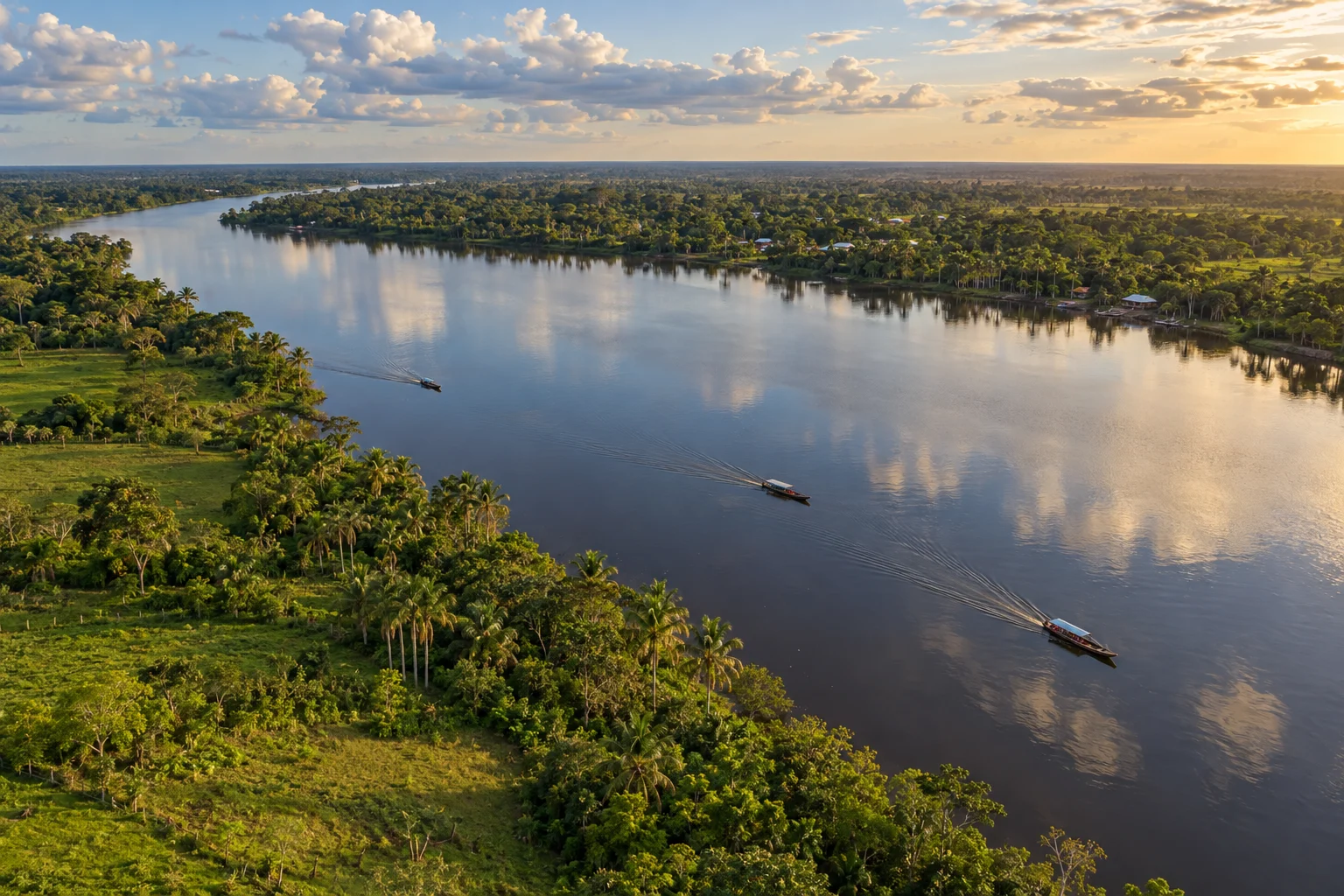
Ucayali is the central lowland region of the Peruvian Amazon. Its river joins the Marañón to become the Amazon itself. Its banks are the heartland of the Shipibo-Konibo people, whose icaros, dieta and kené designs the rest of the ayahuasca world borrows. Our maestros come from this river, from the communities of Paoyhan and Nueva Betania. Everywhere else we run, they travel to work. Here they work within a day of home, with medicine from the watershed they learned it in.
The logistics are the region’s other argument. Pucallpa, the capital, is a city of about 330,000 with 6 to 8 direct flights a day from Lima. It is also on Peru’s road network, which Iquitos is not. All 4 of our houses are a drive from its 1 terminal: Manantay in about 30 minutes, Yarinacocha and San Francisco in about 40, the Pucallpa house in under an hour. No boat, no launch, no river to read, and guests sit on night 2 at every house.
Lima to the heartland before lunch
6 to 8 direct flights a day between LATAM, Sky and Star Perú, then 30 to 60 minutes of road to any of the 4 houses. The bus takes about 20 hours over the Andes, so fly.
4 hospital numbers, each printed
About 20 minutes from San Francisco to Hospital Amazónico de Yarinacocha, the shortest chain of any jungle house we run. About 40 from Yarinacocha and Manantay, and about 50 from the Pucallpa house. Different numbers, same type size, on every page.
The full lowland without the water leg
About 150 metres, the Amazon in every direction, and nothing in the week that floats. The lake and the river are there to look at. The emergency chain never touches them.
What we will not do here
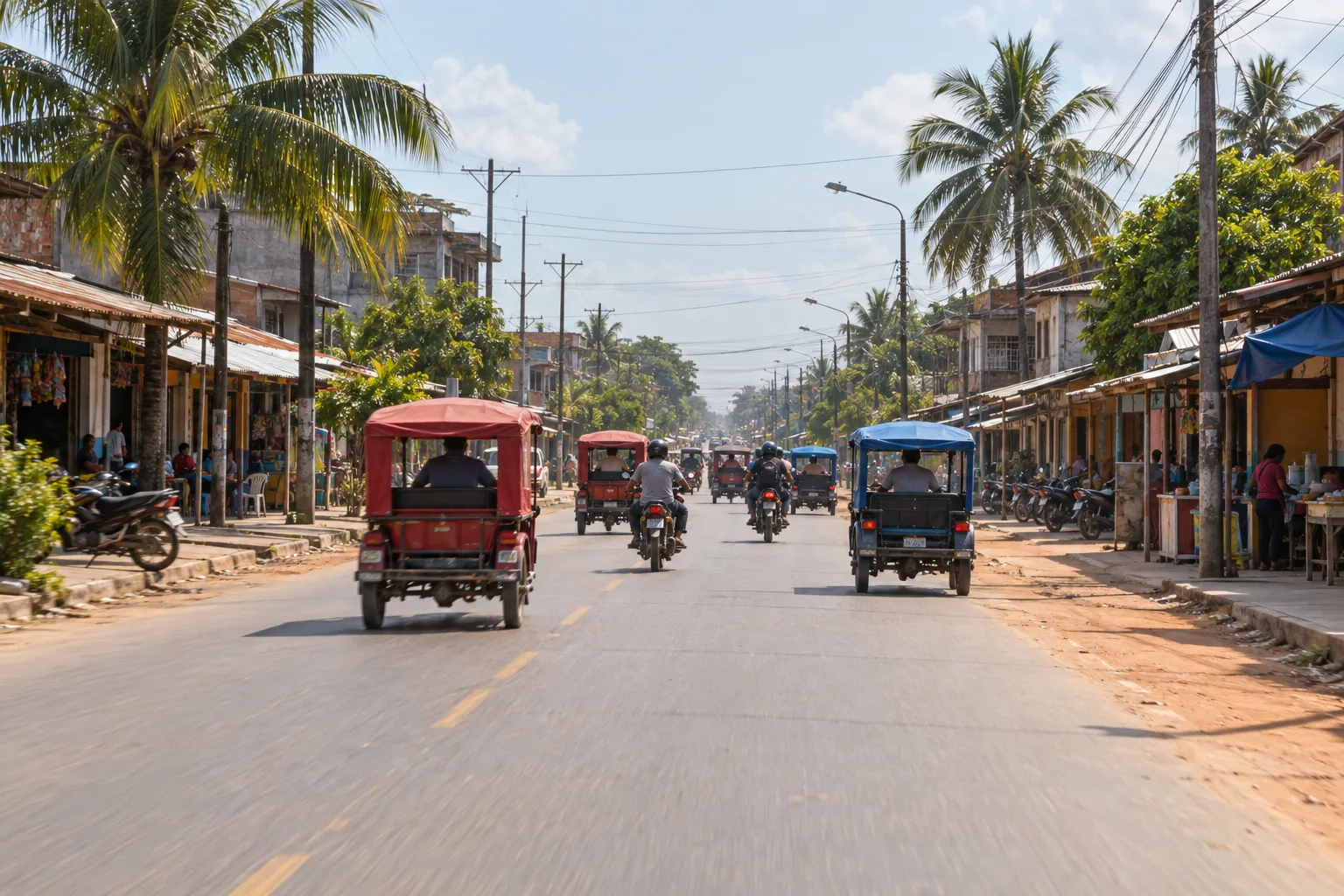
We will not brand the Shipibo-Konibo heartland as ours. The kené designs belong to the communities, and we never use them as decoration on this site. San Francisco’s artisans sell their own work, so if you want kené, buy it from the woman who made it. The lake is not our amenity and the community is not our photo backdrop. And we will not sell Pucallpa as a wilderness. It is a working river port with sawmills and motos. Our houses sit in forest outside it, and we print the quiet each one earns as minutes.
02 · Getting here
1 flight, then 3 roads to 4 houses
Everyone comes through Pucallpa, and nothing in the region’s logistics floats. From the airport, Manantay is about 30 minutes south through the city, the 2 lake houses about 40 minutes around Lake Yarinacocha, and the Pucallpa house under an hour out of town. Your confirmation letter names the house, the route and the minutes before you are asked for anything.
Land in Lima. International arrivals connect the same day. If your flight lands late, sleep in Lima rather than chasing the last connection. The week should not start with a sprint.
The 1 flight. LATAM, Sky and Star Perú fly it direct, 6 to 8 departures a day between them. You cross the Andes and drop into unbroken green, with the Ucayali below in wide brown loops. Pucallpa arrives as tin roofs, sawmills, motos and the port.
Option 1: south, past the last streets. Through the city and Manantay to where the paving ends and the Ucayali floodplain begins. The Manantay house is there, with Hospital Regional de Pucallpa about 40 minutes back.
Option 2: around the lake. Out to Lake Yarinacocha, the oxbow lake the Shipibo treat as their capital. The Yarinacocha house sits on its quiet far shore, and the San Francisco house sits beside the Shipibo-Konibo community of San Francisco de Yarinacocha. Both are reached by road around the shore, not by crossing.
Option 3: out of town. Past the port traffic to the Pucallpa house, in forest outside the city. It has the most forest around it of the 4, and it is still road the whole way.
No acclimatisation days needed. Nothing at 150 metres asks anything of your body but heat. The first ceremony lands on night 2 at every house, with a physician awake in the maloca until dawn.
The emergency numbers, house by house
From the San Francisco house, about 20 minutes by road to Hospital Amazónico de Yarinacocha in Puerto Callao, the shortest chain of any jungle house we run. From the Yarinacocha house, about 40 minutes to the same hospital. From the Manantay house, about 40 minutes to Hospital Regional de Pucallpa. From the Pucallpa house, about 50 minutes to the regional hospital. No chain in the region touches water, and a physician is awake in the maloca every ceremony night at every house. “Close to a hospital” is not a number, and we will not use it.
3 medicines, 1 price, 2 of them optional
Ayahuasca is the week, at every house. Kambo and Bufo are offered only to guests who are separately cleared and who ask. Neither costs extra, because charging for them would give us a reason to recommend them.
Ayahuasca
5 to 6 hours, dusk to dawn, 12 guests and 2 maestros.
A brew of caapi vine and chacruna grown in this watershed, the maestros’ own, and cooked at each house by the maestros who serve it. Nothing is trucked or flown in. 4 ceremonies with rest nights between them.
Kambo
20 to 40 minutes, fully conscious, on a rest day.
A frog secretion applied to small superficial burns on the skin. Not psychoactive, unpleasant, and always at least 24 hours from a ceremony. We measure your water rather than loading it.
Bufo
15 minutes most people cannot describe afterwards.
Synthetically sourced 5-MeO-DMT, 1 to 1, only on the morning after the final ceremony, and only when the physician and your integration lead agree independently. Most first time guests are asked to wait.
7 nights, and the first ceremony is on night 2
No house in Ucayali asks your body for an acclimatisation day, so the calendar is the same at all 4. Arrival, a settling day, then 4 ceremonies spread across the week with rest days between. The night after a ceremony is when most guests make sense of it.
Arrival, and nothing else
Collected from Pucallpa airport, then your house’s own road: 30 minutes to Manantay, 40 around the lake, under an hour to the forest house. Intake with the physician, an introduction to your integration lead, and an early night.
A settling day, then the first ceremony
A walk before the day warms: the lakeshore, the floodplain edge or the forest track. A plant bath in the afternoon, blood pressure checked. The first ceremony runs that night from 9 until first light, with a physician awake in the maloca until dawn.
Rest, deliberately empty
No screens, 1 meal, and a conversation with your integration lead if you want one. Most guests sleep until mid morning.
The second ceremony
Usually the night guests describe afterwards. The maestros have watched you for 2 nights and adjust per person.
Rest, plant baths, an optional Kambo session
Each house’s own morning: the lake flat and silver before the heat, or the floodplain birds at Manantay. Kambo runs the same morning for guests who are separately cleared. No ceremony that night.
The third ceremony
Most weeks this is the quietest one. The room knows itself and the maestros work with less noise.
The fourth ceremony, and closing
Guests often say this is where the previous 3 finally made sense. The maestros close at first light.
A slow morning, Bufo for 1 or 2, then the road to the airport
Bufo only where both leads agree, and never on a travel morning: guests taking it stay a further night. Everyone else is at the terminal in 30 to 60 minutes for the afternoon flight to Lima.
Book your flights around this, not the other way round
Arrive the day before your week begins if connections are tight. Book the afternoon departure on day 8, not the morning one, and keep the 2 days after you land at home empty. If you want the Puerto Callao waterfront or San Francisco’s artisan market, see them in the days before your week, not after, and buy from the person who made it.
If a center will not tell you who is singing over you, that is your answer
Everywhere else we run, these maestros travel to work. In Ucayali they work on their own river. Paoyhan and Nueva Betania are Shipibo-Konibo communities on the Ucayali, within a day of every house. A physician is on site every night at every house, an integration lead stays with you for a year, and everyone who touches your week is named to you in writing.
Maestro Rono Meni
Paoyhan, Ucayali riverOur senior maestro, working on his home river. Leads the first and fourth ceremonies of every week.
Maestra Sanken Bea
Nueva Betania, Ucayali riverWorks with plant baths and the dieta alongside ceremony.
Maestro Inin Soi
Paoyhan, Ucayali riverSecond maestro in most ceremonies, and the one guests tend to talk to at dawn.
Attending physicians
Pucallpa · internal & emergency medicine1 per house, every night. They read every application, run intake, and stay awake through all 4 ceremonies. Named to you in writing before you are asked for anything.
How the maestros are paid, and photographed
A salary, not a fee per ceremony, paid whether 4 guests come or 12. Photographed only with permission and paid for it. We never reproduce Shipibo kené patterns as decoration anywhere on this site. Read about us
06 · Before you get excited
6 things we would rather you knew now than after paying
It is not a treatment
We make no medical claims. Ayahuasca is not a cure for any condition, and guests who arrive expecting one tend to leave disappointed and occasionally worse.
Pucallpa is a working port
Sawmills, motos, river trade, and streets that flood in the rains. Our houses sit in forest outside the city, and 30 to 60 minutes of road buys real quiet. The region’s working face is part of arriving, and we will not photograph around it.
The hospital numbers run 20 to 50 minutes
San Francisco’s 20 is the shortest chain of any jungle house we run. The Pucallpa house sits at about 50. We print each number in the same type as everything else, and screening seats some medical histories at the shorter ones, with the reason in writing.
The heartland is not a brand
The Shipibo-Konibo hold this river’s tradition: the icaros, the dieta, the kené. Our maestros are from its communities and are paid salaries, not per ceremony. The tradition stays theirs, and we would rather say so than imply otherwise.
It is hot in every month
Lowland Amazon: about 30 to 32°C by day and 20 to 22°C at night, with heavy air and the hardest rain from about October to April. The first 2 days are when the heat costs you, which is why they are deliberately empty. If you want the Amazon without this, San Martín is our high-jungle region.
You cannot come next month
Screening takes about 2 weeks and the dieta takes 3 more. The 7 nights sit inside about 4 months of work, most of it at home. If you want to sit in 4 weeks, we are the wrong center.
The community, the lake, the floodplain or the forest
All 4 Ucayali houses share the protocol, the price, the pay standard and the 12 guest limit. They differ in which road you take out of Pucallpa, what sits outside the maloca, and how long the drive to a hospital runs. We would rather move you between them than sell you the one you clicked first.
| San Francisco · the community | Yarinacocha · the lake | Manantay · the floodplain | Pucallpa · the forest | |
|---|---|---|---|---|
| From the airport | About 40 minutes, the last stretch on graded earth | About 40 minutes, road around the lake | About 30 minutes, south through the city | Under an hour, road the whole way |
| Nearest hospital | Hospital Amazónico de Yarinacocha, about 20 minutes | Hospital Amazónico de Yarinacocha, about 40 minutes | Hospital Regional de Pucallpa, about 40 minutes | The regional hospital in Pucallpa, about 50 minutes |
| The setting | Secondary forest on the lake, past the Shipibo-Konibo community | The quiet far shore of the oxbow lake | Floodplain forest where Manantay’s streets stop | Forest outside the city, the most of the 4 |
| Within earshot | The community: a working village, not a set | Water birds, and a peque-peque by day | Egrets, and high water from about December to April | Forest, and little else |
| Choose it if | The shortest hospital chain decides it, or you want the community close | You want the lake itself outside the maloca | You want the shortest drive from the terminal | You want the deepest remove a road can reach |
08 · Price
1 number, and no add-ons on arrival
$5,800 covers the whole week at our ayahuasca retreat center in Ucayali, whichever of the 4 houses you sit at, including the year afterwards. Nothing is upsold once you are here, the optional medicines cost nothing extra, and being declined for one changes nothing about what you paid.
Nothing is charged until a physician confirms your place. Payment plans run over 3 or 6 months once a place is offered. Flights and travel insurance are not included. We recommend insurance that covers trip cancellation on medical grounds, because sometimes the medical grounds are ours.
09 · Questions
What people ask about an ayahuasca retreat center in Ucayali before they write
Where is Ucayali, and why hold retreats there?
How do I get to Ucayali?
Which house in Ucayali is right for me?
Is the ayahuasca made locally?
Is this the Shipibo tradition?
What is the weather like?
Why choose Ucayali over Iquitos or San Martín?
How many guests, and how much does it cost?
How far is the nearest hospital?
Is ayahuasca legal in Peru?
Does ayahuasca cure depression or PTSD?
Where we are on the map
Our 4 Ucayali houses sit around Pucallpa, the region’s airport city: 2 on Lake Yarinacocha, 1 past Manantay on the Ucayali floodplain, and 1 in the forest outside the city. The map shows Pucallpa and the lake. Accepted guests get the exact address and a pin for their house once a physician confirms the place, because 12 people live there for 7 nights and we do not publish the gates.
Ucayali, Peru
Central lowland Amazon, capital Pucallpa. 4 houses off 1 airport: San Francisco and Yarinacocha on the lake, Manantay on the floodplain, Pucallpa in the forest, all reached by road.
Open in Google Maps ›- From Pucallpa airport
- 30-60 minBy road to every house: 30 minutes to Manantay, 40 to the lake, under an hour to the forest.
- Elevation
- About 150 mNo altitude protocol anywhere in the region. First ceremony on night 2.
- Nearest hospital
- 20-50 minHouse by house: 20 from San Francisco, 40 from Yarinacocha and Manantay, 50 from the Pucallpa house.

Lake Yarinacocha, the Puerto Callao waterfront and San Francisco’s artisan market are all within reach of Pucallpa. We ask guests not to plan any of it for the days after the final ceremony.
No charge to apply · reviewed within 48 hours
Ask us the 4 questions.
Who reads my medical file, how far is the nearest hospital, how are the healers paid, and how often do you say no. In Ucayali the second answer is 20, 40 or 50 minutes, house by house, in writing. Ask us all 4, then ask everyone else you are considering. We are comfortable being compared on those answers.