Relationships After Ayahuasca: What Changes At Home
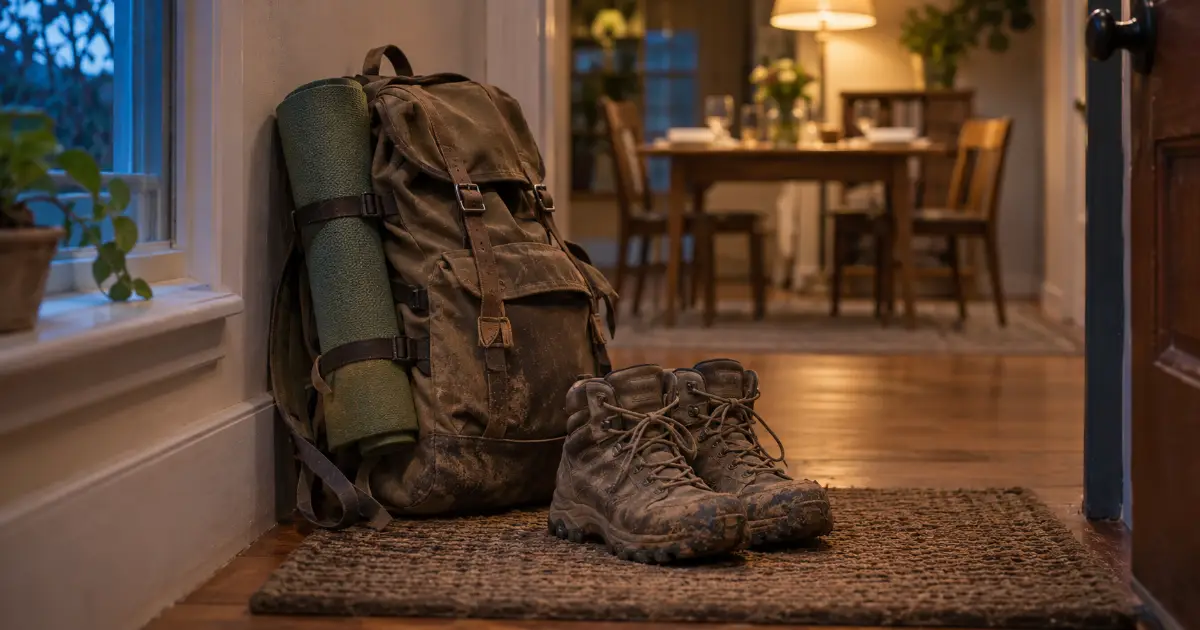
Relationships after ayahuasca often change in how you feel around people before anything changes between you. You may come home more open and less patient with small talk. You may also feel alone at a table full of friends. In the Global Ayahuasca Survey, 21.0% of the 7,839 drinkers who answered its mental health questions said they felt disconnected or alone in the weeks or months after.
Across roughly 2,400 guests in 10 years at our retreat in Peru’s Ucayali region, the hardest stretch we see comes after the flight home. You’re back with people who weren’t there, in a routine that didn’t move while you did.
Relationships after ayahuasca are the ways people relate differently to partners, family, friends and coworkers once they’re home from a ceremony. That can mean feeling closer or more distant, wanting different conversations and different nights out, or friction with people who didn’t share the experience. It tends to start in the first weeks back.
What Happens To Relationships After Ayahuasca?
After ayahuasca, the first change in your relationships tends to be how you read people, and the second is how you feel about them. In a 2022 study that tracked relationship ratings a month after a ceremony, the partner rating moved the least.
What The Research Shows
Start with the first week. A 2021 study in Frontiers in Pharmacology followed guests at 4 retreat sites in the Netherlands. The morning after a ceremony, they were better at naming what other people were feeling. A week later, they still were. The study was small, with 43 people at the start and fewer at each check, and it had no comparison group. It still fits what guests tell us: you notice more, and some days that’s too much.
A month out, the picture gets mixed. A 2022 study in the same journal followed 53 first-time drinkers at 2 ceremony sites in North America. After 1 month, their ratings for how they got along with friends, children and parents went up. The rating for their partner went up the least, and the study couldn’t tell that change apart from chance. By the study’s own bar, none of these changes counted as a real effect, even though its summary reports a rise. Treat it as a hint and nothing stronger.
What We Hear On Follow-Up Calls
Our second follow-up call, in week 3, checks 5 things: sleep, relationships, work, mood and any symptoms that worry you. By 6 to 12 months, better relationships are one of the most common things guests report. They tell us they can now have conversations they used to avoid. The most common complaint is the other side of that. They changed, and the people and routines around them didn’t.
Why Do You Feel Lonely After A Retreat?
You feel lonely after a retreat because you changed somewhere the people at home weren’t. A retreat gives you days of quiet, a small group that understands you and staff checking on you, and most of that stays behind when you fly home.
The survey numbers show how common this is. Of the 7,839 drinkers who answered the Global Ayahuasca Survey’s mental health questions, 21.0% felt disconnected or alone afterward. Across everyone with any unwanted mental health effect, 87.6% saw it as part of growth or integration, and 11.9% needed help from a doctor, therapist, counselor or alternative practitioner. Our post on ayahuasca fears covers what that survey found about the weeks after.
Where you drink matters too. A 2023 paper in Psychoactives studied written answers from 1,630 drinkers in the same survey. Feeling that others didn’t understand came up more often for women and for people who drank outside a church. Support that stopped the moment the ceremony did was mostly a problem outside church settings. Church members already have a community that drinks together. Retreat guests fly home to people who weren’t in the room.
It’s also on the list of 5 things guests most often tell us they wish they’d known: coming home would be harder than going.
Who To Tell, And What To Say First
Tell 1 or 2 people who’ll notice the change in you anyway, and lead with what’s different in your days. Keep the visions for people who ask.
| Who | When | Start with | Hold back |
|---|---|---|---|
| Your partner | Your first week home | What you need this week: sleep, quiet, a lighter schedule | Every ceremony detail on your first night back |
| Close family | Once you’ve settled | 1 change they’ll see, like going to bed earlier | Arguing about whether ayahuasca works |
| Close friends | When they ask | What it felt like for you | Other guests’ stories |
| Your boss or coworkers | Only if you need to | That you were on a retreat in Peru | Details of what you drank |
| Social media | Not in your first weeks | Nothing, until you’ve settled | Posts about other guests |
Before any of these talks, sleep. Our guide to flying after a retreat explains why the trip home goes better when you rest first.

The Rule From Our Integration Circles
Every retreat’s first integration circle starts with the same rule from our integration lead: “What is shared here stays here. You may share your own experience outside this space, but you may never share someone else’s.”
It works at home too. Your story is yours to tell. The person crying on the mat next to you isn’t. When friends push for the wild parts, tell them you’ll talk about your own night and nobody else’s.
Work, Social Media And The Law At Home
Ayahuasca is legal in Peru, but your home country’s drug laws still apply once you land. Our guide to ayahuasca’s legal status covers where those lines sit.
That’s what we tell guests: if your job involves a professional license or a security clearance, talk to a lawyer at home before you post about it. At work, you don’t owe anyone the details. “I was on a retreat in Peru” is a full answer.
What If Your Partner Wasn’t There?
If your partner wasn’t at the retreat, expect the gap to show up with them first. Your partner sees the change every day but missed the part that caused it.
In the 2023 survey analysis, partners who didn’t share the experience came up as one source of disconnection. In the 2022 study, the partner rating moved the least. So your partner needs a different update than your friends get: less about the visions, more about what your days at home will look like now.
We see this with couples who come together, too. They never get mats next to each other, and our integration lead gives them the same briefing: “Your partner’s experience is not yours to manage. Focus on your own process. You will have a lifetime to share what happened here.” It still holds when only 1 of you went. Share at the pace your partner can take in, and don’t make them your integration therapist.
If your partner is curious but not ready to drink, they can come with you next time without drinking. They follow the same dieta and join the integration circles. In ceremony, they sit quietly on a mat or stay in their room. We host 2 or 3 of these guests a year. Some are partners there to support someone, and some want to see the place before they drink themselves.
Should You Make Big Changes After Ayahuasca?
Hold off on big changes you can’t undo for your first weeks home. But changing nothing carries a risk too, and it’s the most common pattern behind the crisis messages we get.
Most integration advice says to wait weeks or months before any big decision. We agree about the big ones. Don’t end a long relationship, quit your job or move in your first weeks back. The exception is safety. If you’re not safe at home, that isn’t a decision to wait on.
Waiting can turn into avoiding, though. Since our WhatsApp support line opened, 15 to 20 guests have used it in a serious crisis after going home. In the most common case, a guest had a big shift in ceremony, then went back to the same strained relationship, high-stress job or unsupportive friends. What hurt was the distance between the person who came home and the life waiting for them.
The guests who do well tend to make at least 1 concrete change in their outside life within 3 months. It can be big, like leaving a relationship that was hurting them or changing jobs. It can be small, like setting 1 boundary with a parent, starting therapy or stopping a substance. The 2023 analysis points the same way: people described an easier time integrating once they took practical steps.
| Hold for now | Try within 3 months |
|---|---|
| Ending a long relationship | 1 honest talk you’ve been putting off |
| Quitting your job | Asking for 1 change at work, like fewer late nights |
| Moving to a new city | Changing 1 weekly routine, like your Friday night |
| Cutting off family | Setting 1 boundary with a family member |
| Booking your next retreat right away | A first session with an integration-aware therapist |
We’ve seen that pattern across roughly 2,400 guests, and no trial has tested it. It’s still why we’d rather you make 1 small change you can undo than wait it out and change nothing.
How Our Follow-Up Works In 2026
Every guest gets a year of follow-up through our integration program, Puente, Spanish for bridge. It starts with a group session on the last full day of your retreat and ends with a 12-month check-in.
Puente is part of every retreat, and our services page lists everything else that comes with your stay.

The Calls, Week By Week
| When | What happens | What it covers |
|---|---|---|
| Last full day of your retreat | Group session | What the first weeks home feel like, common mistakes, how to reach us |
| Week 1 | 30-minute video call | How re-entry is going, hard emotions, your daily practice |
| Week 3 | 20-minute call | Sleep, relationships, work, mood, worrying symptoms |
| Weeks 6 to 8 | Email, with an optional call | Where things stand |
| Month 3 | Email, with an optional 15-minute call | Where things stand |
| Month 6 | A check-in | |
| Month 12 | Anniversary email, with an optional call | An invitation to reconnect |
| Any time | WhatsApp line, reply within 4 hours during the day | Hard days, relationship ruptures, anything that scares you |
Since Puente started, about 85% of guests have taken the week 1 call, and about 40% still reply by month 6. We don’t chase guests who are doing well and stop replying. Going quiet when you’re struggling is different, since isolation is the clearest warning sign we see after a retreat. If you’re struggling, you get more, with weekly calls for 4 to 6 weeks when someone needs them.
If you’re still choosing a center, put aftercare on your list of questions for any retreat and ask for the schedule in writing.
The Alumni Group And The Therapist List
Every guest is invited into our alumni group on the way out. It runs on Signal, an encrypted messaging app, and has about 400 former guests. It’s active every day, and our integration lead moderates it. The rules are short: no medical advice between members, no promoting other centers or substances, disagree with respect, and nothing shared there leaves the group.
For what a group chat can’t hold, we keep a list of at least 30 integration-aware therapists in 6 countries: the US, Canada, the UK, Australia, Germany and the Netherlands. Our integration lead has spoken with each one. Every therapist on it has worked with psychedelic integration, is licensed where they practice and doesn’t treat the experience itself as a symptom. We update the list every year, and therapists who get bad feedback from guests come off it. You also get our written guides, including 1 on relationship changes.
When Is It More Than Integration?
It’s more than integration when it’s getting worse instead of better, or when it stops you from working or sleeping. Strain at home is common, but losing your grip on what’s real is not.
For the milder stuff, like vivid dreams, mood swings and tension at home, we tell guests it usually settles within 4 to 6 weeks, and we add calls if it doesn’t. These signs need more than patience: you can’t work or keep up your relationships, or you feel cut off from your body or surroundings for days. The same goes for panic attacks that keep coming back, hearing voices or feeling watched.
If that’s you, see a doctor now, and call your local emergency number if you or anyone else is in danger. Then message our WhatsApp line. Our integration lead will call you, check that you’re safe and connect you with a therapist near you from our list. The line isn’t an emergency service, and a reply can take up to 4 hours. If you might hurt yourself, call or text 988 in the US. Our post on ayahuasca psychosis risk covers the rarer, more serious cases.
Relationships after ayahuasca take work on both sides, and most of that work happens at your kitchen table. When you’re comparing retreats in Peru, ask every center to walk you through the year after you fly home. Then see how our ayahuasca retreat plans for the year after your last ceremony.
We wrote this from published studies and what we see in our own follow-ups. It isn’t medical or legal advice.
FAQs
Do relationships after ayahuasca usually get better or worse?
It depends on the relationship. In a 2022 study of 53 first-time drinkers, ratings for friends, children and parents went up a month later, and the partner rating went up the least. None of those changes cleared the study’s own bar, so treat them as a hint. The strain we see most comes from going home to a life that hasn’t changed.
Is it normal to feel lonely after an ayahuasca retreat?
Yes. In the Global Ayahuasca Survey, 21.0% of 7,839 drinkers felt disconnected or alone in the weeks or months after. Feeling that others didn’t understand came up more often for women and for people who drank outside a church. Retreat guests go home to people who weren’t there.
What should I tell my partner after ayahuasca?
Start with what you need this week, like sleep, quiet or a lighter schedule, and save the ceremony details for when they ask. Your partner sees the change every day but missed what caused it. If they’re curious, they can join a future retreat without drinking, and we host 2 or 3 guests a year that way.
Should you make big decisions about relationships after ayahuasca?
Hold off on decisions you can’t undo for your first weeks home, unless you’re not safe. By 3 months, the guests we see do well have usually made at least 1 concrete change, such as setting a boundary with a family member, starting therapy or stopping a substance. We’ve seen that across roughly 2,400 guests.
How long does it take to feel normal after ayahuasca?
For milder changes like vivid dreams, mood swings and tension at home, we tell guests to expect them to settle within 4 to 6 weeks. If things get worse instead of better, or you can’t work or sleep, see a doctor. In the Global Ayahuasca Survey, 11.9% of people with an unwanted mental health effect needed help from a professional or alternative practitioner.
What support should you get after an ayahuasca retreat?
Ask any retreat for a written follow-up plan. Ours runs a year: a 30-minute call in week 1, a 20-minute call in week 3, then check-ins at 6 to 8 weeks and at 3, 6 and 12 months. Guests also get a WhatsApp line with a reply within 4 hours during the day, a list of at least 30 integration-aware therapists in 6 countries and an alumni group of about 400 former guests.
Should I tell my employer I did ayahuasca?
You don’t owe anyone the details, and saying you were on a retreat in Peru is a full answer. Ayahuasca is legal in Peru, but your home country’s drug laws still apply once you land. If your job involves a professional license or a security clearance, talk to a lawyer before you post about it.