5-MeO-DMT Retreat Vs Ayahuasca Retreat

A 5-MeO-DMT retreat and an ayahuasca retreat are not 2 versions of the same week. One is a 15 to 20 minute session, 1 guest at a time, in daylight. The other is 4 ceremonies across 7 nights, in a group of 12, in the dark. We run an ayahuasca retreat in Peru’s Sacred Valley, and we offer 5-MeO-DMT once, on the final morning, to guests that 2 different people have cleared separately. Our rule is that most guests are not offered it at all. That is the part the comparison pages leave out: being cleared for one of these medicines tells you close to nothing about whether you clear the other, because the gates are not the same gate.
What Is The Difference Between A 5-MeO-DMT Retreat And An Ayahuasca Retreat?
The difference is duration, setting, and who is allowed in the room.
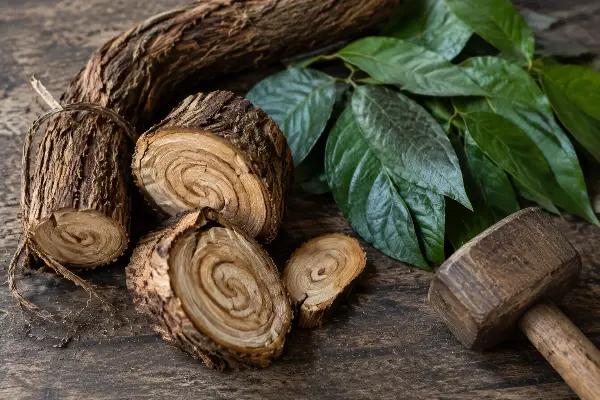
A 5-MeO-DMT retreat is built around a single inhaled dose lasting minutes, taken lying down with sitters present. An ayahuasca retreat is built around repeated all-night group ceremonies across a week. 5-MeO-DMT is 1 molecule. Ayahuasca is 2 plants whose interaction is the whole point, and the reason its screening is stricter about medication.
That second difference drives almost everything else. Ayahuasca’s vine contains monoamine oxidase inhibitors, which is what lets the DMT in the chacruna leaf survive your gut. It’s also why our screening reads like a pre-operative form. 5-MeO-DMT is inhaled, so it needs no MAOI to work. That does not make MAOIs safe alongside it. 5-MeO-DMT is itself broken down by monoamine oxidase, so an MAOI raises how much reaches you and how long it lasts. MAOI medication is an absolute stop for both medicines. What 5-MeO-DMT adds is a cardiovascular question ayahuasca does not ask. If psilocybin is also on your list, the same MAOI question separates those 2.
The 2 Medicines, Side By Side
9 rows separate them, and 4 are logistics, screening or risk rather than the experience itself. That is where the real decision sits. Operational rows below are our own protocol.
| 5-MeO-DMT (Bufo) | Ayahuasca | |
|---|---|---|
| Onset | About 15 seconds | About 40 minutes |
| Duration of effect | 9 to 14 minutes median in trial conditions; 15 to 20 minutes end to end for us | 5 to 6 hours |
| How often | Once, on the final morning | 4 ceremonies across 7 nights |
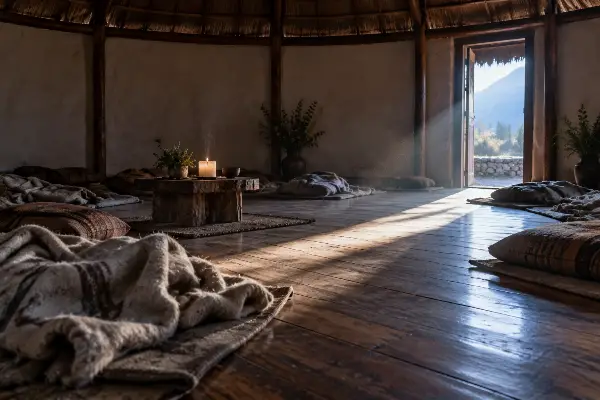
| Setting | 1 guest, 2 facilitators, daylight | 12 guests, 2 maestros, darkness |
| Memory of it | Usually none of the peak | Detailed, often more than you wanted |
| Can you stop it | No, not after the inhale | No, you ride it out |
| Purging | Rare | Expected at some point |
| Who clears it | The physician and the integration lead, separately | The physician |
| First visit | Usually asked to wait | Yes, this is the week |
The duration row is the one most pages get wrong, and it matters more than it looks. The setting row is the one to check at any center you shortlist, because staffing ratios decide who reaches you at 2am.
How Long Each One Actually Lasts, Measured
5-MeO-DMT is shorter than the comparison pages say. Most of them quote a range topping out somewhere between 30 and 45 minutes.
The Phase 2b trial of GH001, an inhaled 5-MeO-DMT formulation, measured it directly and published the result in JAMA Psychiatry in 2026. Across 6, 12 and 18 mg doses, the median duration of psychoactive effect ran from 9.0 to 14.0 minutes, measured in a clinic rather than recalled afterwards by somebody who was not in a position to check. Read medians as medians. Individual sessions in that same trial ran as long as 50 minutes, so the top of the ranges you see elsewhere is not invented. The typical session is just far shorter than those ranges imply.
Our own page says 15 to 20 minutes, and that is not a contradiction. Our figure counts from the inhale until a guest can sit up and hold a conversation. The trial is counting the psychoactive effect itself. The gap between those 2 numbers is the return, and the return is most of what a facilitator is actually there for.
Ayahuasca is longer by a factor of roughly 20. In our ceremonies effects begin around 40 minutes after the cup and the room closes near first light, which we describe as 5 to 6 hours, 4 times, with a rest night between each one. Controlled pharmacology puts the drug’s own time course shorter than the night is, with peak effects inside the first 2 hours. Treat any single figure as the shape rather than a promise.
Across a week with us that is 20 to 24 hours in ayahuasca ceremony against 15 to 20 minutes of 5-MeO-DMT. Those are not comparable commitments, and no honest page should present them as a straight choice.
Which One Is Harder To Get Cleared For?
5-MeO-DMT, by a wide margin, and the gap is larger than most people expect.
We publish both contraindication lists, so you can put them next to each other, and what a screening checks is the same process for both. This is the comparison I have never seen another operator print, and it is the single most useful thing on this page.
| Condition | Ayahuasca | 5-MeO-DMT |
|---|---|---|
| MAOI medication | Absolute stop | Absolute stop |
| Schizophrenia or bipolar I | Absolute stop | Absolute stop |
| Uncontrolled hypertension | Absolute stop | Absolute stop |
| Pregnancy or breastfeeding | Absolute stop | Absolute stop |
| Cardiac history | Stop if an event within 12 months | Stop for any cardiac condition or arrhythmia |
| Seizures | Stop for epilepsy | Stop for epilepsy or any seizure history |
| Severe liver disease | Absolute stop | Not a listed stop |
| A difficult week in ceremony | Not applicable | Absolute stop |
| Signatures required | 1, the physician | 2, independently |
Read the cardiac row again. Ayahuasca asks whether you have had an event in the last year. 5-MeO-DMT asks whether you have a cardiac condition at all. On these lists somebody with a managed arrhythmia and no recent event can sit in 4 ceremonies and still be declined on the last morning.
The seizure row works the same way. Epilepsy stops both. A single seizure 15 years ago stops only the second one.
Then there is the row that has no equivalent anywhere in this field. A difficult or destabilising week in ceremony is an absolute stop for 5-MeO-DMT, and it’s a criterion that cannot be assessed before you arrive. You can pass every medical check in March and be declined in October because of how your fourth night went.
The liver row runs the other way, and it’s worth saying so rather than only listing the places we’re stricter. Severe liver disease is an absolute stop on our ayahuasca list and is not on the 5-MeO-DMT one. Do not read that as 5-MeO-DMT being gentle on a damaged liver, because it is cleared hepatically too. It means the 2 lists were written against different risks, and this is the row where ayahuasca screens harder.
Why 2 People Have To Agree, Not 1
Every other medicine here is cleared by the physician alone. 5-MeO-DMT needs a second signature because the risks run past the medical ones.
Our physician reads the cardiac picture, the serotonergic medication list including anything tapered for the week, and blood pressure on the actual morning rather than on the form. Your integration lead answers a different question: not whether you can survive it, but whether you’ll do anything useful with it once you’re home. Either can say no, and neither has to explain the decision.
Serotonin syndrome sits underneath both signatures. Combining 5-MeO-DMT with SSRIs, SNRIs or MAOIs carries that risk directly. Lithium is on the same stop list for a different reason: alongside classic psychedelics it has been associated with seizures rather than serotonin syndrome. A taper completed for the retreat still counts on the last morning, because the question is how long you’ve been off it rather than whether you stopped.
Can You Do Both In The Same Week?
Yes, in a specific order, and never on the same day.
We offer 5-MeO-DMT only on the morning after the fourth ceremony has closed, once the ayahuasca work is finished. Never at night. Never in a group. Never on a travel morning, because the day afterwards has to be empty.
The order is not a preference. Ayahuasca’s vine is a monoamine oxidase inhibitor, 5-MeO-DMT is broken down by monoamine oxidase, and the combination is hazardous. A 2022 comment in Human Psychopharmacology set that out, alongside a second point worth knowing: 5-MeO-DMT has never been found in traditional ayahuasca preparations, so anyone offering you the 2 together is not reproducing a tradition.
The case usually cited behind that warning deserves a closer look than it gets. A 2005 report in the Journal of Analytical Toxicology described a death after a man combined 5-MeO-DMT with a harmala-containing brew. The following year a group of 6 researchers formally challenged how it had been framed in the same journal, arguing the blood level showed the 5-MeO-DMT was taken separately rather than as part of the brew.
That challenge does not weaken the pharmacology, and it does not change our rule. It does mean the case evidence is thinner than the confident warnings elsewhere suggest. Almost every page in this field repeats “never combine them” and cites nothing at all, and the useful version of that rule was never a warning. It’s a timetable. A center that will not tell you its spacing rule does not have one.
If you’re weighing retreats, the questions to ask any center include this one, in writing, before you pay anything.
Why We Ask Most First Timers To Wait
Because 5-MeO-DMT integrates badly when it’s stacked on a first ayahuasca week.
It’s short, total, and usually leaves no narrative at all. The peak is typically not remembered, there is often no imagery, and nothing arrives resembling a story. Somebody still working through 4 ceremonies has nowhere to put that. It’s the reasoning behind the rule, not a prediction about you.
So our published position is that a first visit is a reason to wait, in almost every case. Also on that list: anyone whose fourth ceremony was difficult, anyone recently tapered off an SSRI or SNRI, anyone flying home that day, and anyone who raises it repeatedly during the week. Wanting it badly is itself a reason we’ll suggest waiting.
This is where I’ll disagree with most of the field. The comparison pages treat these as 2 doors and invite you to pick the one matching your temperament. On these 2 lists the same person is rarely eligible for both in the same week, and the choice you’re actually making is not which medicine suits you. It’s which gate you can get through, and that’s a question of medical history and of how a week went, not of personality.
There’s evidence behind the wider version of that point. The Global Ayahuasca Survey of 10,836 people, published in PLOS Global Public Health in 2022, found acute physical adverse effects in 69.9% of 8,216 respondents, mostly vomiting, with 2.3% of the 5,775 who answered needing medical attention afterwards. Among the predictors of those effects was taking ayahuasca in a non-supervised context. Setting and supervision showed up in the data. Temperament did not.
What The 2026 Research Shows
The clinical evidence for 5-MeO-DMT is now stronger than the evidence for ceremonial ayahuasca, and it comes with a caveat that matters for anyone booking a retreat.
The GH001 Phase 2b trial published in JAMA Psychiatry in 2026 randomised 81 patients with treatment-resistant depression, 40 to the drug and 41 to placebo. The difference in MADRS score change at day 8 was 15.5 points in favour of GH001 (P<.001), with 23 of 40 reaching remission against 0 of 41 on placebo. No severe or serious adverse events were reported in the placebo-controlled period. Nausea affected 17 of the 40 patients given GH001.
Those are strong numbers. Here’s the caveat: that trial used precisely measured doses of 6, 12 and 18 mg given an hour apart in a clinic, with an individualised escalation. A retreat is not that, whoever runs it, and neither we nor anyone else should quote a JAMA result as though it describes what happens in a maloca.
We make no medical claims about either medicine. Ayahuasca is not a treatment for any condition, and neither is 5-MeO-DMT. The peer reviewed research on ceremonial ayahuasca is early and limited, and we cite its limits rather than talking around them.
Where Can You Legally Do Each One?
The 2 molecules sit differently in international law, which is why the retreat map looks the way it does.
DMT, the compound ayahuasca delivers, is listed in Schedule I of the INCB Green List of substances under the 1971 Convention. 5-MeO-DMT appears in no schedule of that treaty at all. That asymmetry is real and almost nobody mentions it.
It is also widely misread, so be careful with it. A substance absent from the 1971 schedules is not automatically legal anywhere. Countries control what they choose to control, and the United States placed 5-MeO-DMT in Schedule I domestically regardless of its treaty status. Treaty scheduling explains why national laws diverge. It does not tell you what any particular country’s law says, and this page is not legal advice.
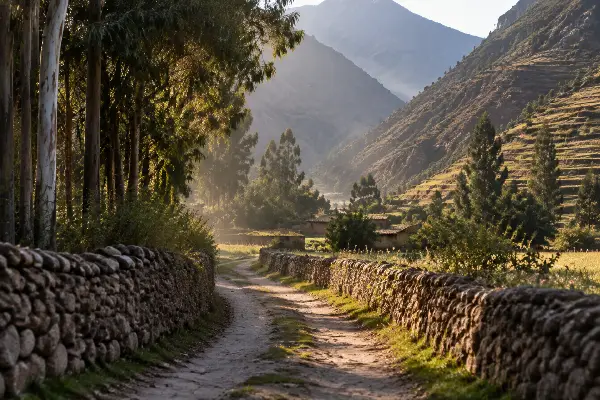
What I can tell you is where each is actually offered. Ayahuasca retreats concentrate in Peru and Costa Rica. 5-MeO-DMT retreats are most associated with Mexico. Peru is where we operate, and traditional ayahuasca use became national cultural heritage here in 2008. Read that declaration narrowly. It protects traditional use, and the body that issued it drew a line between that and commercial use, so it is not the blanket permission it usually gets quoted as. Check your own jurisdiction before you carry anything anywhere, because none of this travels.
What Each Retreat Costs
Our week is $5,800, and the 5-MeO-DMT session costs nothing extra.
That covers 4 ceremonies, a single occupancy room, the dieta kitchen, transfers from Cusco, an optional Kambo session, 12 months of integration calls, and a 5-MeO-DMT session for guests both leads clear. The January Deepening week is $6,400. Flights and travel insurance are not included, and nothing is charged until the physician confirms your place.
Not pricing it separately is deliberate, and I’d apply the same test to anyone you’re considering. A center that charges extra for its most intense medicine has a financial reason to find you eligible. Ask what a 5-MeO-DMT session costs as an add-on. If there’s a number, you now know something about how the clearance decision gets made.
Standalone 5-MeO-DMT retreats are usually priced separately from anything else, which is one reason comparing total retreat cost is more useful than comparing a per-session rate.
What We Use, And Why It Is Not From A Toad
Our 5-MeO-DMT is synthetic. No toad is milked for anything we serve.
The Incilius alvarius toad lives in the Sonoran Desert, thousands of miles from Peru, and has no part in Shipibo practice or in this valley. Milking stresses the animal, it’s often repeated on the same individuals, and retreat demand is reported as a pressure on wild populations, though nobody has the baseline population data to size it. Synthetic 5-MeO-DMT is molecularly identical to the compound in the secretion, and it can be dosed precisely instead of estimated, which matters more than the ethics argument when you’re the person inhaling it.
Ask any center this directly and listen to how precisely they answer. Vagueness here usually means toad, and anyone selling it as ancient Amazonian lineage is inventing a heritage for a desert animal.
Who Is In The Room
Both medicines are run by the same team, in the same week, under one screening process.
12 guests per retreat and 2 maestros in every ceremony. Our protocol has an internal medicine physician from Cusco read every application before a place is offered or a payment taken, and stay on site all 7 nights, awake until first light. Our published commitments are that we say no about 1 time in 5, that a declined applicant is never charged, and that everyone gets the reason in writing.
The 5-MeO-DMT session itself is 1 guest and 2 facilitators. You lie down before anything is administered, because standing is not possible at the peak. One facilitator stays in physical contact throughout. The other handles the dose and watches the clock. Blood pressure is taken before and after.
None of that is exotic. It’s the minimum I’d want if it were me on the mat.
If you’re deciding between a 5-MeO-DMT retreat and an ayahuasca retreat, send us your history and your medication list and let a physician read it. Our ayahuasca week is the thing we actually sell. The 5-MeO-DMT session is a maybe at the end of it, decided by 2 people who will have spent 7 days with you, and a no costs you nothing at all.
FAQs
Which is stronger, a 5-MeO-DMT retreat or an ayahuasca retreat?
5-MeO-DMT is more abrupt and more total. Onset is about 15 seconds and the peak arrives within a couple of minutes. At that peak the sense of being a separate person typically goes, and the peak itself is usually not remembered. Ayahuasca is longer and more detailed, and people generally come back with material they can describe. Stronger is the wrong axis: one erases the account, the other writes a long one, and they suit different intentions.
Should a first timer choose a 5-MeO-DMT retreat or an ayahuasca retreat?
Ayahuasca, in almost every case, and that is our published position rather than a preference. A first visit is itself a reason we ask guests to wait for 5-MeO-DMT, because a medicine that leaves no narrative integrates badly on top of 4 ceremonies you are still processing. Wanting it strongly is another reason we suggest waiting.
Does clearing ayahuasca screening mean you can do 5-MeO-DMT?
No, and the gap is wider than most people expect. Ayahuasca stops for a cardiac event within 12 months; 5-MeO-DMT stops for any cardiac condition or arrhythmia. Ayahuasca stops for epilepsy; 5-MeO-DMT stops for any seizure history. It also needs 2 independent clearances rather than 1, and a difficult week in ceremony is an absolute stop that cannot be assessed before you arrive.
Does 5-MeO-DMT make you purge the way ayahuasca does?
Rarely. Purging is expected at some point across ayahuasca ceremonies, and the Global Ayahuasca Survey found acute physical effects, mostly vomiting, in 69.9% of the 8,216 respondents who answered that question. 5-MeO-DMT is inhaled rather than drunk, so there is no gut load. Nausea affected 17 of 40 patients in the GH001 trial, but that is not the drawn-out physical purge ayahuasca produces.
How long should you wait between ayahuasca and 5-MeO-DMT?
Never the same day, and here only on the morning after the final ceremony, once the ayahuasca work has closed. Ayahuasca’s vine is a monoamine oxidase inhibitor and combining an MAOI with 5-MeO-DMT is dangerous, which is why a center that cannot state its spacing rule in writing does not have one.
Is the research stronger for 5-MeO-DMT or ayahuasca?
For depression specifically, 5-MeO-DMT now has the stronger controlled evidence. A Phase 2b trial of the inhaled formulation GH001, published in JAMA Psychiatry in 2026, randomised 81 patients and reported a 15.5 point MADRS advantage over placebo at day 8. That was a clinic with measured doses rather than a 5-MeO-DMT retreat or an ayahuasca retreat, and neither medicine is a treatment for any condition.